
The Best Marketing Tools to Supercharge Your Business in 2026
In today’s fast-paced digital world, smart marketers don’t just work harder—they work smarter with the right tools. Whether you’re a solopreneur, small business owner, or growing team, having the proper marketing stack can save hours, boost engagement, and drive real results.
Table Of Content
- 1. All-in-One Platforms: Your Marketing Command Center
- 2. SEO Tools: Get Discovered on Search Engines
- 3. Content Creation & AI Tools: Create Faster and Better
- 4. Social Media Management: Schedule, Engage, and Analyze
- 5. Email & Marketing Automation: Nurture Leads on Autopilot
- 6. Analytics & Insights: Measure What Matters
- 7. Bonus Emerging Tools for 2026
- How to Build Your Marketing Stack Without Overwhelm
At PakBug.com, we love exploring practical ways to grow online. In this guide, we’ll break down the top marketing tools across key categories for 2026. From AI-powered content creators to analytics powerhouses, these picks help you stay competitive without breaking the bank. Many offer generous free tiers, making them accessible for beginners and pros alike.
1. All-in-One Platforms: Your Marketing Command Center
When you want everything in one place, these platforms shine:
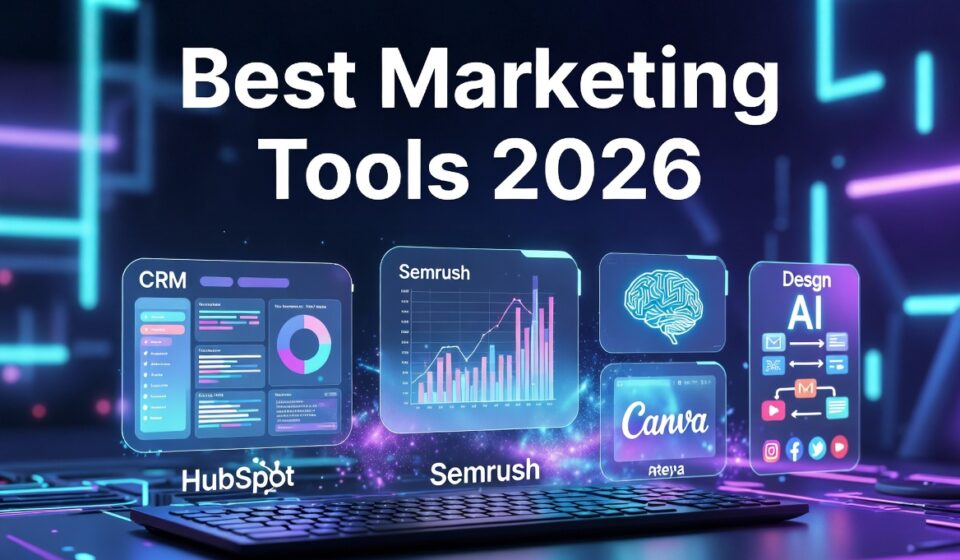
HubSpot: The go-to for inbound marketing. It combines a free CRM, email automation, landing pages, and analytics. Perfect for small teams scaling up. Its AI features now help with smarter lead scoring and content suggestions.
Mailchimp: User-friendly email marketing with built-in automation and basic CRM. Great for newsletters, promotions, and audience segmentation. In 2026, its AI enhancements make campaign personalization even easier for small businesses.
These tools reduce tool-switching fatigue and give you a unified view of your efforts.
2. SEO Tools: Get Discovered on Search Engines
Search visibility remains king. These tools help you research keywords, analyze competitors, and optimize content:
Semrush: An all-rounder for keyword research, site audits, PPC insights, and competitor tracking. Its AI features now support generative engine optimization (GEO) for AI search results.
Ahrefs: Excellent for backlink analysis, content gap identification, and ranking tracking. Ideal if you’re serious about organic growth.
Google Search Console (Free): Essential for monitoring how Google sees your site, fixing issues, and tracking search performance.
Start with free tools like Google Search Console and Google Analytics 4, then layer on paid options as you grow.
3. Content Creation & AI Tools: Create Faster and Better
Content is still the fuel for marketing, but AI makes it scalable in 2026:
Canva (with Magic Studio): Drag-and-drop design for social graphics, presentations, videos, and more. The AI tools generate images, remove backgrounds, and suggest layouts—perfect even if you’re not a designer.
ChatGPT or Google Gemini: Free or low-cost writing assistants for blog ideas, email drafts, social captions, and outlines. Use them as a starting point and always add your unique voice.
Jasper or similar AI writers: Specialized for marketing copy, ad creatives, and long-form content. They help maintain brand tone while speeding up production.
Pro tip: Combine AI for speed with human editing for authenticity—AI handles the heavy lifting, you add the strategy.
4. Social Media Management: Schedule, Engage, and Analyze
Don’t post manually across platforms. These tools keep your social presence consistent:
Buffer: Simple and affordable for scheduling posts, tracking performance, and managing multiple accounts. Great for beginners.
Hootsuite: More advanced with listening features, analytics, and team collaboration. Monitors conversations and measures engagement effectively.
Focus on platforms where your audience hangs out (Instagram, LinkedIn, TikTok, etc.) and use these to maintain a steady posting cadence.
5. Email & Marketing Automation: Nurture Leads on Autopilot
Email still delivers one of the highest ROIs in marketing:
ActiveCampaign: Powerful for advanced automation, conditional workflows, and segmentation. Excellent for personalized customer journeys.
Brevo (formerly Sendinblue) or Klaviyo (especially for e-commerce): Combines email, SMS, and automation with strong analytics.
Automation tools let you send the right message at the right time based on user behavior, freeing you to focus on strategy.
6. Analytics & Insights: Measure What Matters
Data-driven decisions win:
Google Analytics 4 (Free): Tracks website traffic, user behavior, conversions, and more. Its AI-powered insights help predict trends.
Hotjar: Visual heatmaps, session recordings, and surveys to understand how visitors interact with your site.
Regularly review metrics like traffic sources, bounce rates, and conversion paths to refine your approach.
7. Bonus Emerging Tools for 2026
Zapier: Connects your apps without coding. Automate workflows like “add new lead to CRM and send welcome email.”
Surfer SEO: Optimizes content based on real-time search data for better rankings.
Clay or PhantomBuster: Helpful for lead generation and data enrichment (use ethically and in compliance with privacy rules).
How to Build Your Marketing Stack Without Overwhelm
Start small: Pick 2-3 free tools (e.g., Canva + Google Analytics + Mailchimp) and master them.
Focus on integration: Choose tools that play well together via native connections or Zapier.
Budget wisely: Many have free plans sufficient for startups. Scale to paid as revenue grows.
Test and iterate: Run small campaigns, measure results, and adjust. What works for one business may not fit yours.
Stay updated: AI features evolve quickly—check for new automations and privacy-compliant options regularly.
The best marketing tools in 2026 aren’t about flashy features—they’re about saving time, understanding your audience, and delivering value consistently. Whether you’re optimizing for traditional search, AI-powered discovery, or personalized automation, the right stack turns marketing from a chore into a growth engine.
At PakBug.com, we’re all about practical tech and business tips for real-world success. Which marketing tool are you excited to try this year? Share in the comments below, or let us know if you’d like a deep dive into any specific tool or category.