
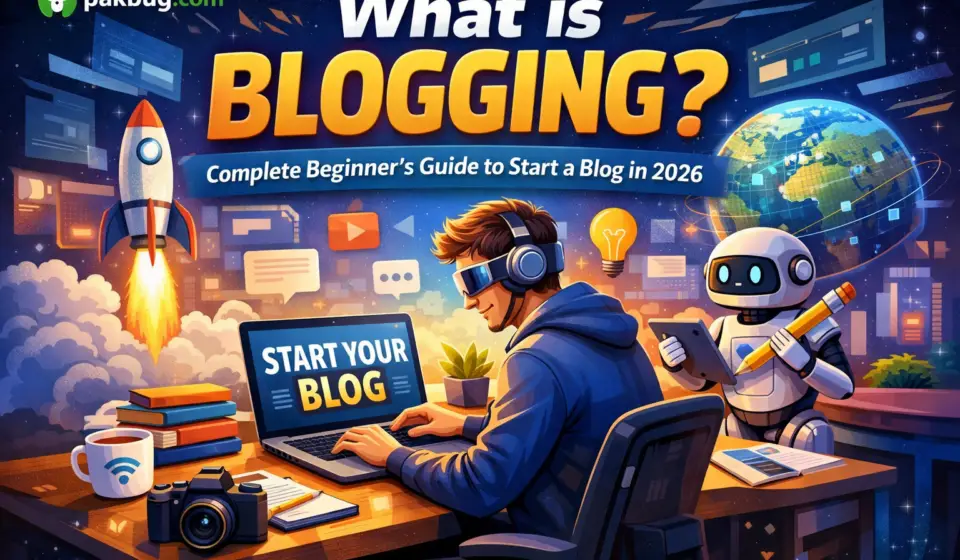
1. What is Blogging?
Blogging is the practice of writing and publishing content on the internet through a website called a blog. A blog is an online journal or informational website where the author — known as a blogger — regularly shares articles, guides, stories, or opinions on a specific topic or niche.
Table Of Content
- 1. What is Blogging?
- 2. A Brief History of Blogging
- 3. Why Should You Start a Blog in 2026?
- ✅ Build Your Personal Brand
- ✅ Earn Passive Income
- ✅ Improve Your Writing and Communication
- ✅ Drive Traffic to Your Business
- ✅ Connect with a Global Audience
- 4. Types of Blogs
- 5. How to Start a Blog – Step by Step
- 01 Choose Your Niche
- 02 Pick a Blogging Platform
- 03 Get a Domain Name & Hosting
- 04 Design Your Blog
- 05 Write Your First Blog Post
- 06 Optimize for SEO
- 07 Promote Your Blog
- 08 Monetize Your Blog
- 6. Blogging SEO Tips for Beginners
- 7. Common Blogging Mistakes to Avoid
- 8. Frequently Asked Questions (FAQ)
- 9. Conclusion
- Ready to Start Your Blogging Journey? 🚀
The word “blog” is a shortened form of “weblog“, a term coined in the late 1990s. Today, blogging has evolved far beyond personal diaries. It is a powerful platform for education, marketing, journalism, personal branding, and earning money online.
📌 Quick Definition: Blogging = Creating and publishing written content on a website to educate, entertain, or inspire a target audience — while building an online presence and potentially earning income.
Whether you are a student, a business owner, a freelancer, or someone with a passion to share, blogging gives you a voice on the internet. At PakBug.com, we believe that anyone can become a successful blogger with the right knowledge and consistency.
2. A Brief History of Blogging
Blogging did not appear overnight. Here is a quick timeline of how it evolved into what it is today:
1994: Justin Hall creates the first known personal blog, links.net, sharing personal diary entries online.
1999: The term “weblog” is coined by Jorn Barger; later shortened to “blog” by Peter Merholz.
1999: Blogger.com launches, making it easy for anyone to start a blog without coding.
2003: WordPress is launched — it eventually becomes the world’s most popular blogging platform.
2005–2010: Blogging explodes in popularity. Professional bloggers start earning full-time incomes.
2015–Present: Blogs evolve with SEO, social media, video content, and AI-assisted writing tools.
2025: Blogging remains one of the most powerful content marketing tools in the digital world.
3. Why Should You Start a Blog in 2026?
Many people wonder — is blogging still relevant in 2026? The answer is a strong YES. Here is why:
✅ Build Your Personal Brand
A blog positions you as an expert in your niche. When people Google your topic and find your content, your authority grows naturally over time.
✅ Earn Passive Income
Successful bloggers earn money through ads, affiliate marketing, digital products, sponsored posts, and more. Many earn thousands of dollars per month from their blogs.
✅ Improve Your Writing and Communication
Blogging sharpens your ability to express ideas clearly and persuasively — a skill valued in every profession.
✅ Drive Traffic to Your Business
If you own a business, a blog can significantly boost your website’s visibility on Google, bringing in free, organic traffic every single day.
✅ Connect with a Global Audience
Your blog has no geographical limits. A post published today can reach readers from Pakistan to the United States to Australia — all at the same time.
4. Types of Blogs
Not all blogs are the same. Here are the most popular types of blogs in 2026:
Personal Blog: A space to share your life experiences, thoughts, and opinions. Great for building an audience around your story.
Niche Blog: Focused on one specific topic — cooking, fitness, travel, finance, or tech. These blogs attract targeted audiences and rank well on Google.
Business Blog: Used by companies to provide value to customers and improve their SEO. Every business should have a blog.
Affiliate Marketing Blog: Created specifically to review and recommend products and earn commissions through affiliate links.
News Blog: Covers breaking news and trending topics in a specific industry or region.
Educational Blog: Provides tutorials, guides, and how-to content to teach readers a skill or concept.
Lifestyle Blog: Covers a mix of topics like fashion, travel, food, and wellness, often driven by a personal brand.
5. How to Start a Blog – Step by Step
Starting a blog in 2026 is simpler than ever. Follow these steps to launch your blog the right way:
01 Choose Your Niche
Pick a topic you are passionate about and that has an audience. Research what people are searching for using tools like Google Trends or Ubersuggest.
02 Pick a Blogging Platform
WordPress.org is the gold standard for serious bloggers. It gives you full control over your site, design, and monetization.
03 Get a Domain Name & Hosting
Your domain name is your address on the internet (e.g., yoursite.com). Choose a reliable hosting provider for fast website speed.
04 Design Your Blog
Install a clean, mobile-friendly theme. Keep it simple and professional. First impressions matter — a well-designed blog builds trust instantly.
05 Write Your First Blog Post
Write content that solves a real problem for your readers. Use a clear headline, short paragraphs, and actionable tips. Aim for 1,000–2,000+ words for SEO.
06 Optimize for SEO
Use your target keywords in the title, headings, meta description, and throughout the article. Install an SEO plugin like Yoast or RankMath on WordPress.
07 Promote Your Blog
Share your posts on social media, in Facebook groups, on Pinterest, and via email newsletters. Consistency in promotion is just as important as writing.
08 Monetize Your Blog
Once you have traffic, explore Google AdSense, affiliate programs, sponsored posts, or selling your own digital products.
6. Blogging SEO Tips for Beginners
Search Engine Optimization (SEO) is the key to getting free, organic traffic from Google. Here are the most important SEO tips every beginner blogger must know:
Keyword Research First: Before writing, find out what your target audience is searching for. Use free tools like Google Keyword Planner, Ubersuggest, or AnswerThePublic.
Use Keywords Naturally: Place your main keyword in the title, first paragraph, subheadings, and meta description — but avoid keyword stuffing.
Write Long-Form Content: Articles between 1,500 and 3,000 words tend to rank higher on Google because they cover topics more comprehensively.
Optimize Your Images: Compress images for faster loading and always include descriptive ALT text with your keyword.
Use Internal Links: Link to other relevant articles on your own blog to keep readers engaged and improve your site structure.
Get Backlinks: Earn links from other reputable websites. Guest posting is one of the most effective ways to build backlinks.
Improve Page Speed: Google favors fast-loading websites. Use caching plugins and a reliable host.
Write Compelling Meta Descriptions: A great meta description improves click-through rates from search results.
Make It Mobile-Friendly: Over 60% of web traffic comes from mobile devices. Your blog must look great on all screen sizes.
7. Common Blogging Mistakes to Avoid
Many beginner bloggers make the same mistakes that slow their growth. Here is what to avoid:
No Clear Niche: Writing about everything confuses readers and search engines. Pick a focused topic and own it.
Ignoring SEO: Great content without SEO is invisible on Google. Always optimize every post before publishing.
Inconsistent Posting: Publishing sporadically kills momentum. Commit to a posting schedule — even once a week is powerful if done consistently.
Not Building an Email List: Social media followers can disappear overnight. Your email list is an asset you own. Start collecting emails from day one.
Giving Up Too Soon: Blogging takes time. Most successful blogs took 12–24 months to gain significant traffic. Patience and persistence are everything.
Copying Others: Duplicate content hurts your SEO and your credibility. Always write original content in your own voice.
Poor Readability: Walls of text push readers away. Use short paragraphs, subheadings, bullet points, and visuals to break up content.
8. Frequently Asked Questions (FAQ)
Is blogging still profitable in 2026?
Absolutely. Blogging remains one of the most cost-effective ways to build an online business. While competition has increased, bloggers who focus on a specific niche, provide genuine value, and invest in SEO continue to grow their traffic and income significantly.
How long does it take to make money from blogging?
Most bloggers start seeing meaningful income between 6 and 18 months after starting. Speed depends on your niche, content quality, posting frequency, and promotional strategy. Some bloggers see results faster through affiliate marketing and sponsored content.
Do I need to know coding to start a blog?
No coding knowledge is required. Platforms like WordPress make it easy to set up and manage a professional blog using drag-and-drop tools. Basic understanding of HTML can be helpful over time, but it is never a requirement to get started.
How many blog posts do I need before I launch?
Aim for at least 5–10 high-quality posts before your official launch. This gives new visitors enough content to explore, which improves time on site and reduces your bounce rate. Quality always outweighs quantity.
What is the best blogging platform for beginners?
WordPress.org is the best choice for long-term blogging because it is flexible, powerful, and SEO-friendly. For absolute beginners who want to start immediately without any technical setup, Blogger.com or Medium are simpler alternatives.
9. Conclusion
Blogging in 2026 is not just a hobby — it is a powerful tool to build your brand, share your expertise, and create a sustainable income online. Whether you want to blog as a side hustle or grow it into a full-time business, the opportunity is very much alive.
The keys to blogging success are simple: choose the right niche, publish consistently, optimize every post for SEO, and promote your content across social media and email. Results take time, but they compound beautifully with patience.
At PakBug.com, we are here to guide you every step of the way — from your very first blog post to building a blog that generates real, lasting income.
Ready to Start Your Blogging Journey? 🚀
Visit PakBug.com for more guides, tutorials, and resources to help you succeed online.